01 / Posture
Open by default
Every methodology, every dataset where we are permitted, every surviving hypothesis. Findings publish openly, on arXiv and wherever else makes them easiest to act on.
This page is not a pitch. It is the soul of the project. If you are reading it, you are the kind of person we built The JEN-R8 Hope Discovery Institute for.
Founder’s essay
Mother’s Day, 1990 — South River, NJ — my mom brought home her newborn baby son. Mother’s Day, 2026 — a few days ago. Yesterday was my 36th birthday. The first year I’ve had to spend either one without her.
Six months ago I lost her to pancreatic cancer. Four months from diagnosis to goodbye. PDAC has a five-year survival rate under 13% — most families never even get a real chance to fight it. Ours barely got one.
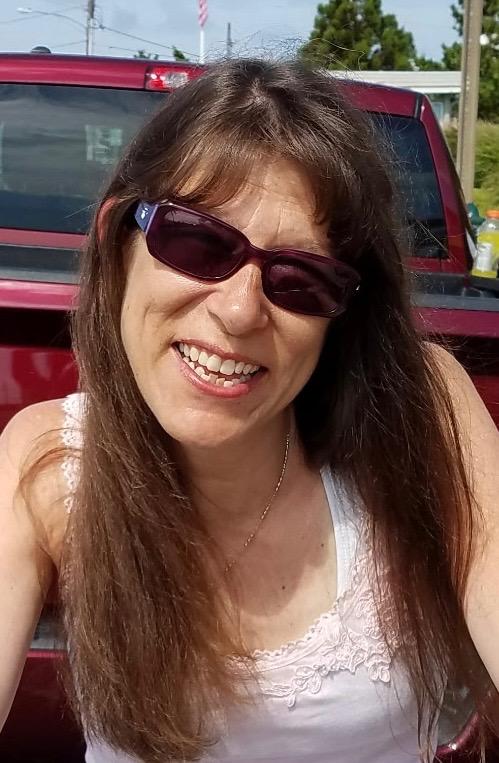
Jennifer Judith (Wyluda) Rhatigan was born on January 21, 1964 and grew up in South River, New Jersey. Small town, big family — the kind of place that gives you deep roots and strong family values. She married my dad in 1986, and from that day forward she had a project, and the project was us. My sister Holly, me, my brother Zac. Five of us against the world, thick as thieves from the start. That was her doing.
As the family grew — our partners, her nephew Eddie who she loved like a fourth son, her grandkids Deklan, Ireland, and Porter — she welcomed every one of them the same way. Open arms. No conditions. The woman was the definition of love. Honestly, you’ve never met a prouder mom.
A few months before her diagnosis I’d been deep on a side project — a cognitive framework that lets AI agents accumulate knowledge over time, instead of starting fresh every conversation. Just curiosity, really. Something to tinker with. I had no idea what it would turn into.
When her diagnosis came in I started reading everything I could about pancreatic cancer. A disease this common, this lethal — surely there were mountains of data on it, right? There were. Most of it had never been cross-referenced. After enough long nights, the two threads in my head joined up. What if the framework I’d been building was the right tool for exactly this problem?
So I steered it that way. Taught it to ingest biomedical research, cross-reference cohort studies, find the patterns nobody had had time to connect. The more I pushed it, the more it gave back. Real signal.
But her cancer moved faster than the engine ever could. I kept building anyway — I think, in a way, it became my coping mechanism. A way to feel like I was still in the fight, even when I already knew how it was going to end.
The doctors moved from treatment to comfort care. In her final days I sat with her and told her about the project, and that I’d carry it forward in her name. She looked at me — already very weak — and replied, completely deadpan:
That was her, even at the end. Never lost her humor. Never stopped trying to make the rest of us smile.
She passed peacefully on November 15, 2025, at sixty-one years old. Every one of us was right there with her. The way she had spent her whole life pouring herself into her family came back to her tenfold, right at the end.
The institute is called The JEN-R8 Hope Discovery Institute. JEN-R8 is pronounced generate — because that’s what the engine does, and because her name was Jen. (She loved my cheesy puns. I think she’d approve of this one.) The work generates hypotheses. With any luck and a lot of effort, it generates hope. That’s my promise to her.
For Mom
“If it’s my time, it’s my time. Good things will come from this. I don’t know how, but I just know it.”
This is me giving it my best shot.
Every methodology, every dataset where we are permitted, every surviving hypothesis. Findings publish openly, on arXiv and wherever else makes them easiest to act on.
We file provisional patents — five so far — to keep findings open rather than locked. Two reasons: prevent others from enclosing biomarkers that should reach patients, and clear the IP path so pharma will actually fund the drug to clinic. Engine code is AGPL-3.0; methodology publishes openly.
Every hypothesis must survive the gates that apply to it — designed to refute, not to confirm. What we do not publish is, in many ways, more important than what we do.
A public ledger of what comes in and what it pays for. Donors see exactly which milestone their dollar moved.
There is no exit. The institute is structured so there is nothing to sell. The work is the point.
The bigger picture
I want The JEN-R8 Hope Discovery Institute to be the place people think of when they think about computational hypothesis generation done honestly. I want the engine running on a dozen disease areas beyond cancer — neurodegeneration, autoimmune, rare disease. I want the validated findings to be in the hands of clinicians and the methodology in the hands of every PI who needs it.
I want the next family to have what ours did not.
Jennifer Judith (Wyluda) Rhatigan
Every discovery is for her, and for everyone whose family is waiting.